


Why Does My Motor Keep Stalling Under Load?
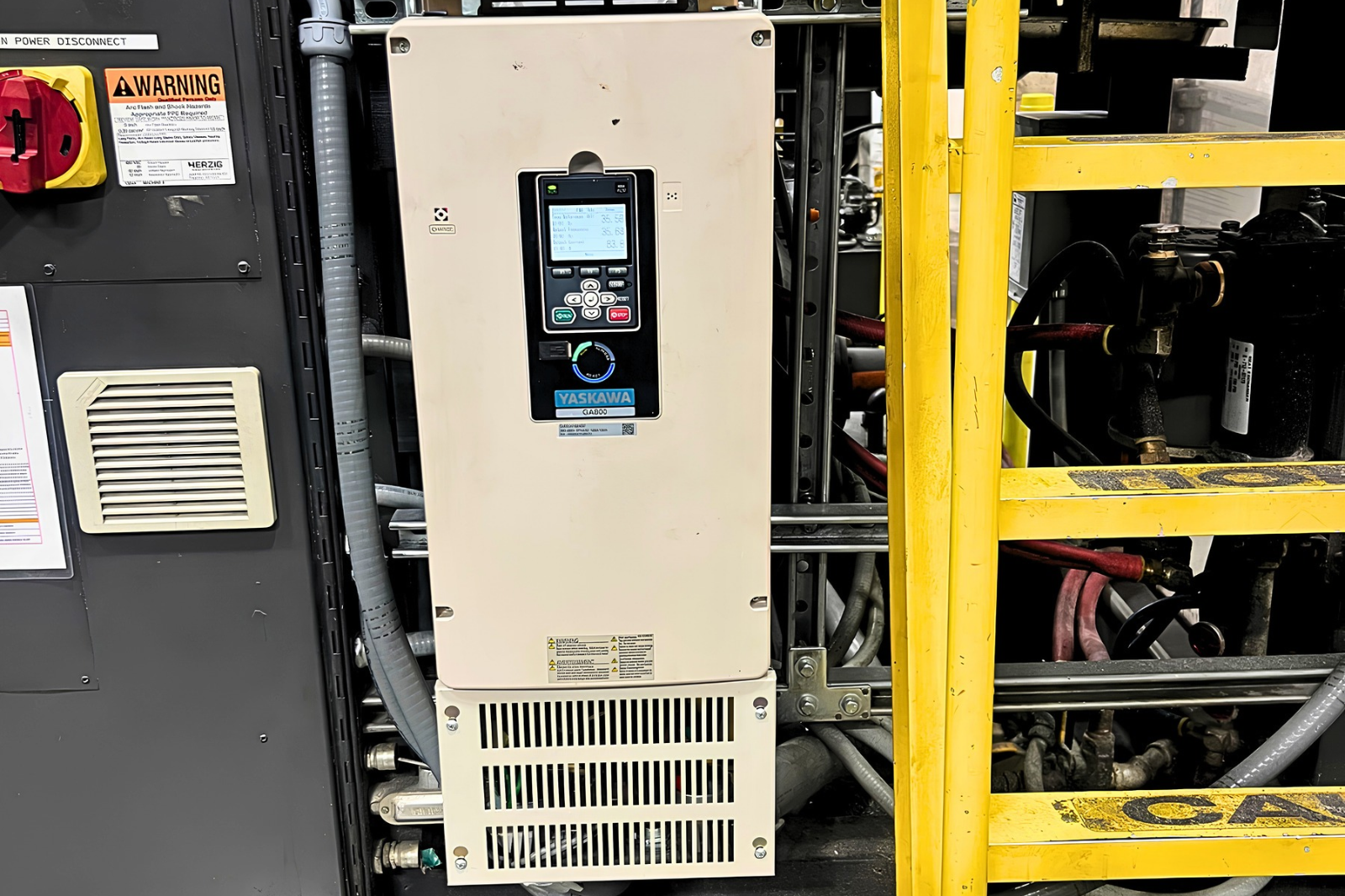
Photo Source: Control Concepts
A motor that runs fine with little or no load but bogs down or stalls as soon as the machine has to do real work can make the VFD look guilty pretty quickly. Sometimes it is the drive. Just as often, though, the drive is reacting to something else: too much mechanical resistance, a motor that can’t produce the torque the application needs, or settings that don’t fit the way the machine actually runs. Before you start changing parameters or replacing equipment, the first thing to figure out is what changes when the load comes on. That usually tells you where to start looking.Why does a motor stall under load?
A motor usually stalls under load because the system can’t produce enough usable torque for what the machine is asking it to do. The reason can be mechanical, electrical, motor-related, or somewhere in the VFD setup. If the motor starts normally and runs fine until production load comes on, pay attention to that change. The machine may be harder to turn than it should be. The drive may be hitting a current or torque limit. Or the motor and VFD may simply not be set up correctly for the application. In other words, the stall is the clue. The job is figuring out what’s causing it.Does a motor stalling under load mean the VFD is bad?
Not necessarily. The VFD is easy to blame because it’s controlling the motor, especially when everything seems fine until the load increases. But sometimes the drive is doing exactly what it’s supposed to do and reacting to a problem somewhere else. A binding bearing, gearbox problem, changing process load, incorrect motor data, the wrong control mode, or poor tuning can all end with the same basic symptom: the motor runs until you ask more from it, then it can’t keep up. Before replacing the VFD, find out whether the drive truly isn’t delivering what the motor needs or whether the motor is being asked to overcome a problem somewhere else.What should you check when a motor keeps stalling?
Start with what happens immediately before the stall. Did the problem show up after a process change? Does it happen at a particular speed? Does the drive show a warning when the load comes on? Is the motor pulling noticeably more current than it used to? Those details can tell you a lot more than changing parameters at random. A few things are worth checking first:- The drive’s fault and warning history. Look for overcurrent, overload, undervoltage, motor overload, torque limit, or other warnings that show up as the load increases.
- The mechanical load. Check for binding, worn bearings, gearbox problems, misalignment, product jams, buildup, or anything else that could make the machine harder to turn.
- Motor nameplate data. Make sure the motor information programmed into the drive actually matches the motor it’s controlling.
- Drive control mode. A control method that works perfectly well on a lightly loaded fan may not give a constant-torque application the response it needs.
- Acceleration and operating speed. Asking a heavily loaded machine to accelerate too quickly or operate in a difficult speed range can expose problems that don’t show up under light load.
- Torque and current settings. Limits or compensation settings that don’t fit the application can affect how the motor responds when more torque is needed.
- The motor itself. Overheating, bearing problems, winding issues, incorrect connections, or a motor that’s no longer capable of carrying the required load can look a lot like a drive problem.
Can incorrect VFD settings cause a motor to stall?
Yes. A perfectly healthy VFD and motor can still perform poorly if the drive isn’t configured correctly for the motor and the application. This becomes especially important on machines that need strong torque response. The drive needs accurate motor information, and the control mode needs to make sense for the load. Depending on the drive and application, tuning can also affect torque response, slip compensation, current limits, acceleration, and how the system reacts when the load changes suddenly. What you don’t want to do is start increasing every torque-related parameter until the motor quits stalling. Too much compensation can create another set of problems. It’s better to understand what the machine actually needs and tune the drive around the motor and load than to keep changing settings until something happens to work. Yaskawa’s GA800, for example, supports different control methods for applications with different motor and torque requirements. For more background on the platform, see What Is a Yaskawa Drive? Applications and Reliability.Can a mechanical problem make a good motor and VFD stall?
Absolutely. Think about what the motor is actually trying to move. A conveyor may have a seized bearing. An extruder may suddenly be seeing more resistance. A gearbox may be starting to fail. A coupling may be misaligned. Material may be building up somewhere in the process. From the drive’s point of view, all of those situations look like more load. The motor draws more current and tries to produce more torque to keep the machine moving. Eventually, the system reaches a limit. The motor slows, the drive trips, or the whole thing stalls. That’s why changing VFD parameters without checking the mechanical side can send you in circles. You may be trying to tune around a problem that shouldn’t be there in the first place.Can the motor itself be the problem?
Yes. A motor can look perfectly normal under light load and still have a problem that only becomes obvious when you ask it to work harder. That’s why a quick no-load test doesn’t always tell you much. A motor with worn bearings, winding damage, overheating problems, incorrect connections, or insulation deterioration may still turn. It just may not be able to produce the torque the machine needs when the load comes on. The motor may also simply be undersized for the application, particularly if the process or load has changed over time. This is where it helps to think of the drive, motor, and machine as one system. A problem in one part can easily make another part look guilty.What if the motor stalls but the VFD doesn’t show a fault?
A lack of a fault code doesn’t necessarily mean everything is working correctly. The motor can lose speed or reach a performance limit without crossing the drive’s threshold for a protective trip. The drive may still be commanding the motor to run even though the system can’t develop enough usable torque to maintain the requested speed. And if the problem is mechanical, the drive may not have anything obvious to report at all. This is where the operating data becomes more useful than the fault screen alone. Look at current, output frequency, commanded speed, warnings, and what the machine is physically doing as the load increases. If the same pattern shows up every time right before the stall, that pattern can point you toward the real problem.Will installing a larger VFD stop the motor from stalling?
Not necessarily. A larger drive won’t fix a binding machine, a damaged motor, bad motor data, poor tuning, or a process that’s asking the system to do something it wasn’t designed to do. The VFD does need to be properly sized for the motor and load. If the application has changed and the existing drive is genuinely reaching its capacity, then sizing may need to be reconsidered. But if a correctly sized system has started stalling because something else changed, installing a larger drive may only hide the real problem or move the failure somewhere else. Before you start upsizing equipment, find out why the existing system is running out of torque or reaching its limits.What did a real motor-stalling problem look like?
A recent Control Concepts project is a good example of why a motor-stall problem sometimes takes more than another round of parameter changes. An extrusion application at Altium Packaging in Anaheim, California, was experiencing a recurring stall condition with a 75 HP motor and drive system. A mechanical isolation issue was repeatedly stalling the motor. Parameter changes had already been attempted on the existing drive, but they couldn’t get the application operating consistently. Control Concepts replaced the existing drive with a 75 HP Yaskawa GA800 configured in open-loop vector mode. But simply installing a new drive wasn’t what solved the problem. The GA800 still had to be tuned for the way the machine actually operated. Control Concepts reduced torque compensation and adjusted the operating parameters until the system could run stably under the conditions it was seeing. The retrofit didn’t require network communications and was completed in one day. You can see the full project in the 75 HP extruder drive retrofit case study.When should you stop adjusting parameters and call someone?
If you’ve checked the obvious mechanical issues, confirmed the motor information, reviewed the drive history, and the machine still stalls under load, more parameter changes may not get you any closer to the answer. At that point, you need to see what the drive, motor, and load are actually doing together. An experienced drive technician can look at the motor data, operating current, control mode, torque requirements, mechanical load, drive history, and what the machine does as the problem develops. That helps separate a tuning problem from a failing component or a mechanical issue before anyone starts replacing expensive equipment. And that’s usually a much better use of time than swapping parts until the symptom disappears.Frequently Asked Questions
Why does my motor run fine with no load but stall under load?The motor may not be producing enough usable torque for the applied load, or the machine may be demanding more torque than it should. VFD settings, motor condition, drive sizing, and mechanical problems can all cause the same symptom.
Can the wrong VFD settings cause motor stalling?
Yes. Incorrect motor data, control mode, acceleration settings, current or torque limits, and application-specific tuning can all affect how the motor performs when the load increases.
Can a mechanical problem cause a VFD-driven motor to stall?
Yes. Binding bearings, gearbox problems, misalignment, material buildup, or other mechanical resistance can increase the load until the motor slows or stalls even when the motor and VFD themselves are healthy.
Should I replace the VFD if the motor keeps stalling?
Not until you know the drive is actually the problem. A stalling motor can be caused by the drive, motor, mechanical load, or configuration. Replacing the VFD without testing the system can leave you with the same problem and a new drive you didn’t need.
Why does my motor stall without a VFD fault code?
The motor can lose speed or reach a torque limitation without triggering a protective fault. Operating current, speed, drive warnings, load conditions, and what happens immediately before the stall can help narrow down the cause.