


What Is a Yaskawa Drive? Applications, Performance, and Reliability
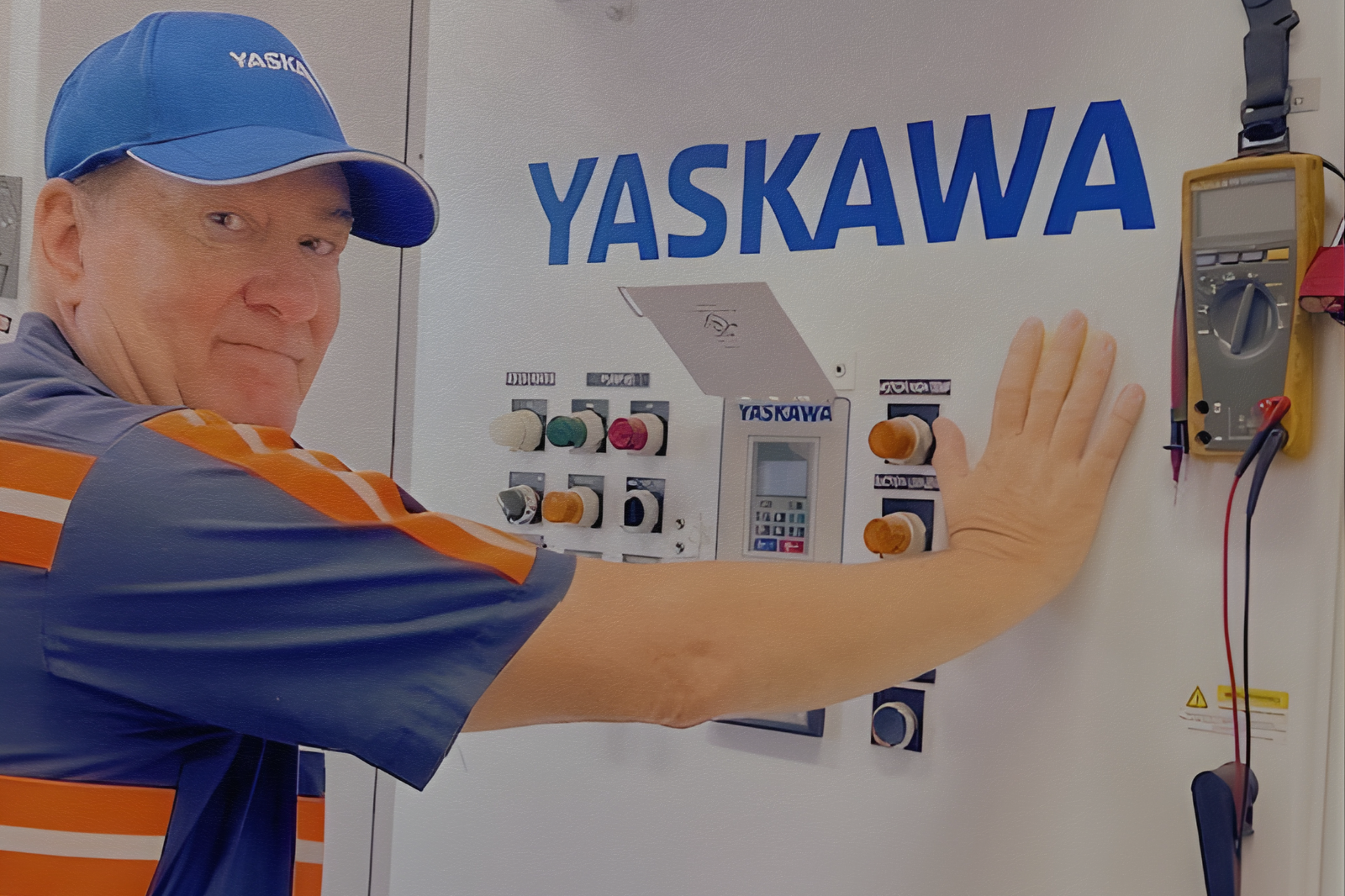
Photo Source: controlconcepts.com
Yaskawa drives are among the most widely used variable frequency drives (VFDs) in industrial automation. Across manufacturing, material handling, water and wastewater systems, HVAC, and process industries, they’re known for reliability, control precision, and long service life.
That reputation didn’t happen by accident. Yaskawa has spent decades designing motion control and drive technology with a focus on predictable performance in real operating environments, not just controlled lab conditions.
If you’re already familiar with how VFDs work, this article builds on that foundation by looking at why Yaskawa drives are so widely trusted and how they’re applied across different industrial demands.
If you’re newer to the topic, starting with a broader overview of what a VFD does and why drives fail can provide helpful context before diving into the Yaskawa-specific view.
What Is a Yaskawa Drive?
A Yaskawa drive is a branded variable frequency drive that controls motor speed and torque by adjusting the frequency and voltage supplied to the motor. Like all VFDs, it allows operators to move away from fixed-speed operation and toward controlled, demand-based motor behavior.
In practical terms, this helps improve:
- Energy efficiency, especially in variable-load applications
- Process control and consistency
- Mechanical life of motors, gearboxes, and driven equipment
- Startup smoothness, reducing electrical and mechanical stress
- Dynamic response to changing loads
This isn’t just a best practice. The U.S. Department of Energy has repeatedly identified motor systems and adjustable speed drives as one of the largest opportunities for industrial energy savings. Through its Motor Systems Program, the DOE outlines how properly selected and configured VFDs can significantly reduce energy use and long-term operating costs, particularly in pump, fan, and compressor applications.
Yaskawa has built its reputation around these same principles. As a global leader in drive and motion control technology, the company designs VFDs that range from compact microdrives for tight-panel installations to high-performance platforms built for torque-critical, regenerative, and networked applications. More details on Yaskawa’s drive portfolio and application focus are available directly from the manufacturer.
That breadth is one reason Yaskawa drives appear so often in facilities with mixed equipment, load profiles, and operating conditions.
Understanding what a Yaskawa drive does is only part of the story. The next question is how those capabilities are applied across different drive families in the field.
Yaskawa Drive Families and Typical Applications
Yaskawa’s product lineup is segmented by application type rather than forcing a single drive to cover every scenario. This approach makes it easier to match the drive to the job without oversizing or unnecessary complexity.
General-purpose and compact drives
Used where flexibility and space efficiency matter:
- GA500 for panel-dense or OEM applications
- V1000 for versatile vector control, including harsh environments
- J1000 for basic volts-per-hertz motor control
High-performance and torque-control applications
Applied where speed, accuracy, torque response, or feedback is critical:
- GA800 for scalable, constant-torque performance
- A1000 for closed-loop control of induction and permanent magnet motors
Fan, pump, and specialty drives
Optimized for energy efficiency and system interaction:
- P1000 for variable-torque fan and pump loads
- U1000 MATRIX drives address ultra-low harmonics and regenerative operation, aligning with
IEEE 519 harmonic guidelines
commonly referenced in industrial facilities. - G7 drives for long motor leads and advanced control requirements
Large-frame and legacy platforms
Many facilities continue to operate:
- FP605 and 1000-series platforms
- Legacy models such as G5, J7, F7, and P7
Long-term platform continuity is one reason Yaskawa systems often remain in service for decades rather than being replaced prematurely.
Why Yaskawa Drives Are So Widely Used
Across industries, Yaskawa drives tend to appear for the same core reasons.
Broad application coverage
From small pumps to continuous production lines, there is typically a Yaskawa platform designed for the task.
Precise motor control
Accurate speed and torque regulation improve process repeatability while reducing mechanical wear.
Built-in diagnostics and efficiency tools
Many models include fault monitoring and protective functions that help operators identify issues early.
Strong documentation and global support
Extensive manuals, application notes, and programming references make systems easier to maintain over time.
These strengths become especially important once drives are installed and exposed to real-world operating conditions.
Where Yaskawa Drives Operate in the Real World
Yaskawa drives are commonly used in:
- Manufacturing and assembly lines
- Pump and blower systems
- Extrusion and web handling
- HVAC and refrigeration
- Material handling and packaging
- Water and wastewater treatment
- Conveyors and vertical transport systems
Many of these environments involve heat, vibration, dust, electrical noise, and fluctuating loads. Drives that maintain control accuracy while tolerating those stresses tend to earn long-term trust.
These same conditions also align with the most common causes of VFD failure. Regardless of brand, heat, power quality, environment, and configuration play a major role in drive reliability.
Supporting Yaskawa Drives Over Their Operating Life
A drive’s reliability depends on more than hardware alone. Sizing, configuration, installation quality, and preventive maintenance all influence long-term performance.
Facilities running Yaskawa drives often benefit from:
- Application-appropriate drive selection
- Accurate commissioning and parameter setup
- Periodic inspections and preventive maintenance
- Informed troubleshooting when faults occur
Over time, experienced support frequently helps extend the life of existing drives rather than defaulting to replacement. Small adjustments or targeted repairs can prevent issues from escalating into unplanned downtime.
When Field Support Becomes the Smart Move
If a Yaskawa drive begins showing:
- Recurring or unexplained fault codes
- Unexpected shutdowns
- Overheating
- Communication errors
- Speed or torque instability
…it is often a sign that something upstream or downstream deserves attention.
Addressing these indicators early reduces the risk of secondary damage to motors, mechanical components, or electrical systems. As with most VFD issues, early diagnosis is typically far less costly than recovery after failure.
What This Means for Your Operation
Yaskawa drives are trusted because they combine reliable motor control, flexible application coverage, and long-term manufacturer support. That trust grows when operators understand how their drives work, what stresses them over time, and which warning signs deserve attention.
Most drive issues trace back to familiar causes: heat, power-quality issues, aging components, environmental exposure, or configuration mismatches. Recognizing those factors early gives operations teams more control over maintenance planning, downtime, and long-term reliability.
When questions come up or performance starts to drift, addressing the issue early is often the most efficient path forward. Small adjustments made at the right time can prevent larger disruptions later. And when something doesn’t look or feel right, getting experienced input early can help clarify next steps before a minor issue becomes a production problem.