


What Is a VFD and Why Do They Fail?
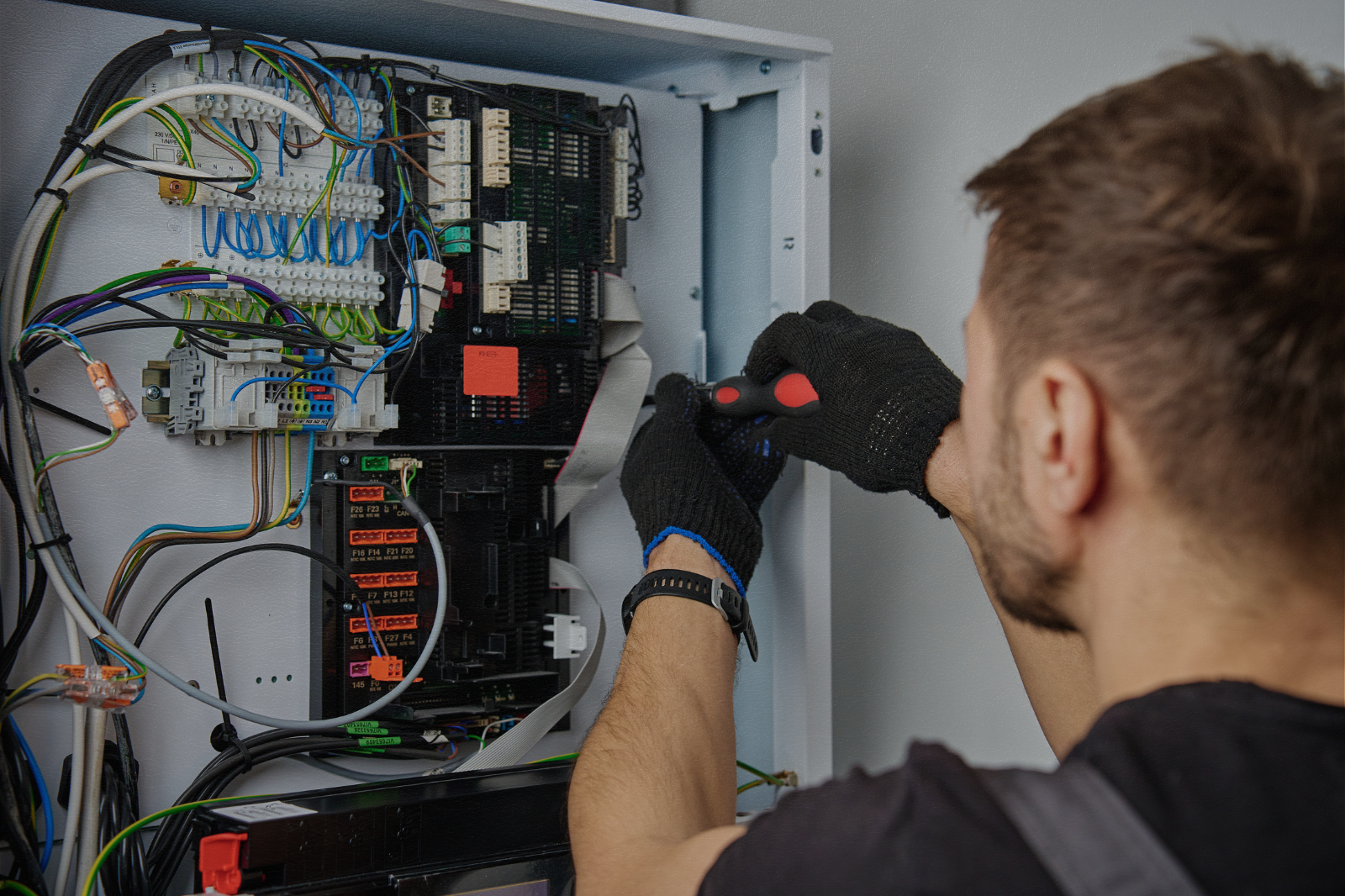
Photo Source: canva.com (Pop Andreea)
A Variable Frequency Drive (VFD) is a motor controller that allows you to adjust the speed and torque of an electric motor by changing the frequency and voltage of the power it receives. In plain terms, it gives you control over how fast a motor runs, how smoothly it starts, and how efficiently it operates.
In industrial environments, VFDs are used everywhere: pumps, fans, conveyors, compressors, packaging lines, HVAC systems, and production equipment of all kinds. They help reduce energy consumption, limit mechanical wear, and make processes more precise and predictable. The U.S. Department of Energy has long highlighted motor system efficiency as a major opportunity for energy and cost savings in industry.
But here’s the part many people learn the hard way: VFDs are also one of the most common failure points in industrial systems.
They’re powerful, yes, but they’re also complex electronic devices working in tough environments. Heat, dust, vibration, power fluctuations, programming errors, and aging components all take a toll over time.
To understand why VFDs fail, it helps to first understand what they’re actually doing, and why they’ve become such an essential part of modern industrial systems. That knowledge can help you spot early warning signs, protect your equipment, and avoid emergency downtime that disrupts production and budgets alike.
What Does a VFD Actually Do?
At its core, a VFD takes standard fixed-frequency AC power and converts it into a variable-frequency output. That might sound technical, but what it really means is this: it gives you control over how your motor behaves.
With a VFD, a motor can:
- Start gradually instead of slamming on at full speed
- Run at different speeds depending on what the process actually needs
- Adjust output in real time as demand changes
- Use less energy
- Experience less mechanical stress over its lifetime
Instead of forcing a motor to run flat-out all the time, a VFD lets it run only as fast as necessary. That small shift, matching output to demand, has a huge impact on efficiency, wear, and reliability.
(If you want a deeper efficiency read, DOE’s Adjustable Speed Drive tip sheet is a solid reference: DOE Tip Sheet PDF).
This is why VFDs are so valuable in real-world industrial settings. You’ll find them everywhere, especially in systems where loads change throughout the day. HVAC systems ramping up and down, pumps responding to flow demand, conveyors handling varying material weights, and production lines that need precise speed control.
And that intelligence is exactly why VFDs have become so common across industrial automation.
Why Are VFDs So Common in Industrial Automation?
VFDs didn’t become standard by accident. They’re everywhere because they solve real problems that plants deal with every day.
When properly applied, VFDs can:
- Lower energy costs
- Improve process control and consistency
- Reduce mechanical stress on motors and equipment
- Extend motor life
- Enable automation, feedback loops, and smarter system behavior
From an operations standpoint, they’re incredibly useful. You get smoother starts, fewer mechanical shocks, better efficiency, and more precise control over how your systems respond to changing demands.
But here’s the trade-off, and this is where experience matters.
The Same Technology That Makes VFDs Powerful Also Makes Them Vulnerable
A VFD isn’t just a simple power device. It’s a tightly integrated system made up of:
- Power electronics
- Control logic
- Sensors
- Cooling systems
- Communication interfaces
- All of these pieces have to work together perfectly.
When everything is healthy, the drive performs beautifully. But when one of those elements starts to fail, whether it’s a cooling fan, a capacitor, a control board, or a communication module, the entire system can come to a halt.
That’s why VFD failures often feel sudden and disruptive. They don’t always degrade slowly like mechanical components. Many electronic failures happen quickly, and when they do, production stops.
This complexity is what makes VFDs so effective, and also what makes them more sensitive to heat, power quality issues, contamination, configuration errors, and component aging.
And that sensitivity is where most failures begin.
Why Do VFDs Fail? (And What Most Failures Have in Common)
In our field experience, most VFD failures don’t happen randomly. They tend to fall into a few consistent categories. Once you know what to look for, many of these issues are predictable and often preventable.
Let’s walk through the most common causes.
Heat Damage
If there’s one thing that shortens the life of a VFD faster than anything else, it’s heat.
VFDs generate heat as a natural byproduct of power conversion and switching. When cooling systems aren’t doing their job, or airflow is restricted, internal temperatures climb quickly.
Common culprits include:
- Clogged or dirty filters
- Failed or weakening cooling fans
- Poor enclosure ventilation
- High ambient temperatures
- Drives that are overloaded or undersized
Excessive heat accelerates component aging, especially in capacitors and power transistors (IGBTs). Over time, this thermal stress shortens the lifespan of internal parts and increases the risk of sudden failure.
Pro tip: If you’re trying to catch heat problems early, thermal inspection can be a game-changer.
This is also where services like infrared thermography make issues visible before they turn into downtime.
Power Quality Issues
VFDs are smart, but they’re also sensitive.
They rely on clean, stable incoming power. When that power becomes unpredictable, problems follow.
Common power-related issues include:
- Voltage spikes
- Brownouts
- Phase imbalances
- Harmonic distortion
These conditions can damage internal components or create intermittent faults that are frustratingly hard to trace. Surges and transients, in particular, often take out input rectifiers and DC bus components, sometimes instantly.
If you want a harmonics reference that speaks “plant reality,” IEEE 519 is the standard many facilities use as a guideline for harmonic limits. Eaton has a clear breakdown here: IEEE 519 overview (Eaton).
And for a VFD-specific view, this harmonic mitigation paper is a useful technical primer: Harmonics & VFDs (PDF).
Capacitor Aging
Capacitors are one of the first parts to wear out in a VFD, and this is completely normal.
Over time, electrolytic capacitors:
- Dry out
- Lose their ability to store energy
- Develop internal resistance
- Eventually fail open or short
When that happens, you’ll often see:
- DC bus instability
- Random shutdowns
- Persistent fault codes
- Total drive failure
Capacitor wear is inevitable. It’s not a question of if, it’s a question of when. Catching this early can save a drive that would otherwise be scrapped.
Contamination and Harsh Environments
Industrial spaces are tough on electronics.
VFDs are regularly exposed to:
- Dust
- Metal shavings
- Oil mist
- Moisture
- Chemical vapors
These contaminants can cause:
- Corrosion
- Short circuits
- Sensor failures
- Blocked cooling pathways
Even a small amount of conductive dust can create a big problem if it lands in the wrong place. This is one of the most common causes of unexpected failures in otherwise healthy drives.
Improper Programming or Configuration
Not every failure is hardware-related.
In many cases, the drive is doing exactly what it was told to do; it was just told the wrong thing.
Incorrect parameter settings can lead to:
- Overcurrent faults
- Torque instability
- Overheating
- Sudden shutdowns
Misconfigured acceleration rates, braking settings, or protection thresholds can quietly stress both the drive and the motor, shortening their life without obvious warning signs.
Mechanical Load Problems
And sometimes, the VFD isn’t the real problem at all.
Issues like:
- Binding bearings
- Jammed conveyors
- Misaligned shafts
- Overloaded pumps
Can force a drive to operate outside its design limits. The VFD will often try to protect the system by faulting, but repeated overload conditions can still cause long-term damage.
The important thing to understand is that most of these issues don’t appear overnight. They develop gradually, and they usually leave clues. The sooner you recognize those clues, the more options you typically have.
Early Warning Signs of a Failing VFD
Most VFD failures don’t come out of nowhere. In many cases, the drive tries to tell you something is wrong long before it actually goes down.
The key is knowing what to listen for, and not brushing off small issues as “normal.”
Common warning signs include:
- Random or recurring fault codes that don’t seem tied to a clear cause
- Unexpected shutdowns or nuisance trips
- Excessive heat coming from the enclosure
- Unusual fan noise; rattling, grinding, or inconsistent speeds
- Sluggish motor response or delayed acceleration
- Inconsistent or unstable speed control
- A burnt or electrical odor
These symptoms are easy to ignore, especially when production is busy, and the system is still “mostly working.” But that’s exactly when damage tends to happen quietly in the background.
What might start as a failing fan, a drifting capacitor, or a loose connection can quickly snowball into a much larger problem. And once critical components fail, repair options become more limited and more expensive.
In our experience, early intervention is almost always cheaper, faster, and less disruptive than waiting for a complete failure.
Which brings us to the next big question we hear all the time: Can a failed VFD actually be repaired?
Can a Failed VFD Be Repaired?
In many cases, yes, it absolutely can.
A failed VFD doesn’t automatically mean you’re stuck replacing the entire unit. With proper diagnostics and experienced hands, many drives can be brought back to life.
Repair is often possible when:
- The damage is limited to replaceable components
- Control boards are still intact
- Firmware can be recovered or reloaded
- Obsolete or legacy parts can still be sourced
This is where experience really matters. Knowing what’s truly failed, and what hasn’t, makes the difference between a smart repair and an unnecessary replacement.
If you’re dealing with a specific platform (like Yaskawa), it can also help to work with a team that supports that brand end-to-end.
What Does a Professional VFD Repair Usually Involve?
A thorough repair process typically includes:
- Component-level diagnostics to pinpoint the exact failure
- Replacement of damaged parts, such as capacitors, IGBTs, rectifiers, or control boards
- Thermal testing to ensure proper heat dissipation
- Load simulation to verify real-world performance
- Parameter verification and reconfiguration, so the drive behaves exactly as it should
When done correctly, a repaired VFD can perform just as reliably as a new one, often at a fraction of the cost.
For many facilities, repair is not only more economical, but it’s also faster. This is especially true for legacy or discontinued models, where lead times for new units can stretch into weeks or months. But repair isn’t always the right choice for every situation.
Repair vs. Replace: How Do You Decide?
This is one of the most common questions we hear: Should we repair this drive, or is it time to replace it?
There isn’t a one-size-fits-all answer, but there is a right answer for each situation.
When making this decision, a few important factors should be considered.
Downtime Urgency
If production is stopped and time matters, repair is often the faster option. Many replacement drives, especially for legacy systems, can take weeks to arrive. A qualified repair can often be completed much sooner.
Cost
In most cases, repair is significantly less expensive than replacement. That includes not only the price of the hardware, but the hidden costs of installation, reprogramming, commissioning, and testing.
Legacy and Compatibility
For older or discontinued drives, repair is sometimes the only realistic option. Newer models may not integrate seamlessly with existing systems, and upgrading can introduce new compatibility challenges.
Programming and Configuration
When you repair a drive, the original programming is typically preserved. With a replacement, everything often has to be rebuilt from scratch: parameters, communication settings, safety logic, and integration with the rest of the system.
Environmental Impact
Repairing a drive keeps usable equipment out of landfills and reduces electronic waste. Replacement has a larger environmental footprint.
The most important takeaway: this decision should never be rushed.
A proper evaluation looks at the whole picture, not just the fault code. It considers the condition of the hardware, the availability of parts, the role the drive plays in your system, and the true cost of downtime.
When those factors are weighed together, the right choice usually becomes clear.
How Preventive Maintenance Reduces VFD Failures
One of the best ways to avoid unexpected VFD failures is also one of the simplest: preventive maintenance.
Just like any piece of hardworking equipment, VFDs perform better and last longer when they’re checked regularly and cared for properly. Small issues caught early rarely turn into big problems. Left unattended, however, they almost always do.
Effective preventive maintenance typically includes:
- Cleaning ventilation paths so heat can escape properly
- Replacing aging capacitors before they fail
- Verifying fan operation and airflow
- Checking thermal performance under load
- Reviewing parameter settings to ensure they still match the application
- Inspecting for corrosion, dust buildup, or contamination
None of these steps are complicated, but they are powerful.
In our experience, regular inspections prevent most catastrophic failures. They also help uncover issues that don’t show up on fault screens yet, like drifting components, weakening fans, or slow thermal breakdown.
Preventive maintenance isn’t just about avoiding downtime. It’s about creating predictability, knowing how your equipment is behaving, how long it’s likely to last, and when intervention makes sense.
And in a production environment, that kind of certainty is invaluable. Still, even with good maintenance, there are times when professional support is the smartest next step.
When to Call a Specialist
Some VFD issues are minor. Others are warning signs that something deeper is going on.
If a drive is showing persistent fault codes, overheating, unusual behavior, or unpredictable shutdowns, continuing to run it “just a little longer” can do more harm than good. What starts as a manageable electronic issue can quickly cascade into mechanical damage, affecting not just the drive but the motor, the gearbox, the pump, or the entire system downstream.
This is one of those moments where experience really matters.
A trained specialist can often spot patterns that aren’t obvious on the surface, whether that’s a power quality issue, a failing component, a configuration mismatch, or a mechanical problem masquerading as an electrical one.
And here’s the reality: early intervention is almost always cheaper than recovery.
Catching a problem early can mean a simple repair instead of a full replacement, hours of downtime instead of days, and a controlled fix instead of an emergency shutdown.
If something feels “off,” it usually is. And that’s the best time to ask for help.
The Bottom Line on VFD Reliability
A VFD is a powerful tool for efficiency and control, but it’s also a complex electronic system working in some of the toughest conditions imaginable.
Most VFD failures aren’t random. They usually come down to a few familiar factors:
- Heat
- Power quality issues
- Aging components
- Environmental exposure
- Configuration or programming errors
The good news? When you know what to watch for and when to act, many of these problems can be prevented or caught early.
Understanding how your VFD works, what stresses it, and what warning signs matter most gives you an advantage. It helps you reduce downtime, protect your equipment, and make smarter decisions about repair, maintenance, and long-term reliability.
And when questions come up, or something just doesn’t feel right, having an experienced set of eyes on the problem can save a lot of time, money, and frustration.
Sometimes the smartest fix is simply starting the conversation early. All of this comes down to one simple idea: understanding your VFD gives you control over cost, downtime, and long-term reliability.