

When Should You Convert a DC Drive and Motor System to AC?
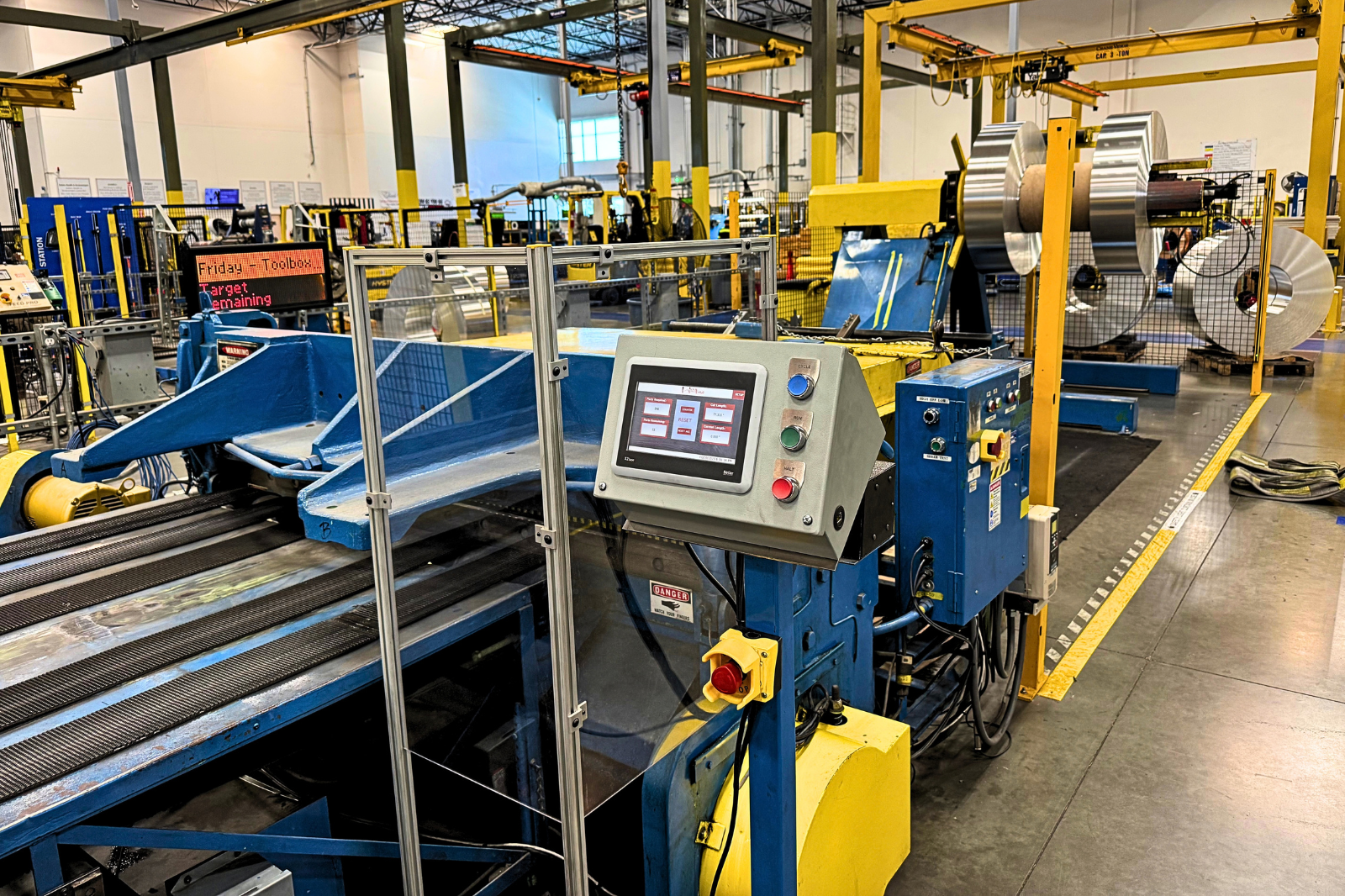
Photo Source: Control Concepts
An older machine doesn’t automatically need to be replaced just because its controls are obsolete. If the mechanical side is still doing its job, an industrial machine retrofit can sometimes give that equipment years of useful life without the cost and lead time of replacing the entire machine.
The harder question is knowing when a retrofit is actually worth it and when you’re better off putting that money toward new equipment.
Here’s what to look at before making that decision.
Should you retrofit an older industrial machine or replace it?
If the machine is mechanically sound and still does what your operation needs, updating the controls, drives, feedback devices, or operator interface may make more sense than replacing the entire machine.
Age by itself doesn’t tell you much.
A 25-year-old machine with a solid frame, good mechanical components, and obsolete controls may be a much better retrofit candidate than a newer machine with worn mechanical components, recurring failures, and performance limitations.
The real question is what’s causing the machine to become unreliable or difficult to support.
If the problem is primarily in the controls, there may be no reason to throw away the rest of the equipment.
When does an industrial machine retrofit make sense?
A retrofit usually makes sense when the machine itself is still useful, but one or more parts of the control system have become unreliable, obsolete, unsupported, or difficult to repair.
That can happen gradually.
Maybe an older controller is beginning to fail intermittently. Maybe replacement boards are getting harder to find. Maybe the HMI is obsolete, the drive is no longer supported, or nobody on your maintenance team wants to touch the program because the hardware and software are several generations old.
Those problems don’t necessarily mean the machine has reached the end of its useful life.
A retrofit may be worth considering when:
- The mechanical equipment is still in good condition. The frame, tooling, bearings, gearing, hydraulics, or other major mechanical components still have useful life left.
- The controls are the weak point. The PLC, HMI, drive, controller, encoder, or other automation components are causing most of the reliability or support problems.
- Replacement parts are becoming difficult to source. Used or refurbished parts may still exist, but availability, condition, and lead times are becoming unpredictable.
- The machine still meets production needs. You don’t need a fundamentally different machine. You just need the one you already have to run reliably.
- A replacement machine would create a long lead time. If new equipment will take months to arrive, a controls retrofit may provide a much faster path back to dependable operation.
Control Concepts recently faced this situation with a cut-to-length machine. The original controller was failing, but the machine itself didn’t need to be replaced. The solution was to modernize the control system while recreating the operating functions the customer already relied on.
We’ll come back to that project below.
When is replacing the machine the better option?
Replacement starts to make more sense when the problems go well beyond the controls and you’d be investing heavily in a machine that still wouldn’t meet your long-term needs.
There’s a point where a retrofit stops being a practical modernization project and starts becoming an attempt to rebuild nearly everything.
If the machine has major mechanical wear, structural problems, outdated safety limitations, insufficient capacity, or can no longer produce what your operation needs, new controls won’t fix those problems.
Replacement may be the better path when:
- Major mechanical systems are nearing the end of their life.
- The machine can’t meet current production speed, accuracy, or capacity requirements.
- Multiple major systems would need to be replaced at the same time.
- The existing design makes the required modernization impractical.
- Your production needs have changed enough that you really need a different machine.
There’s no value in installing a modern PLC and drive system on equipment that’s still going to leave you fighting worn mechanical components or production limitations.
The controls and the machine have to be evaluated together.
What parts of an older machine can usually be kept?
More than you might think. A controls retrofit doesn’t automatically mean stripping the machine down and starting over.
If the existing components are reliable, compatible with the new system, and still make sense for the application, they may be able to stay.
Depending on the machine, that might include:
- The mechanical structure and tooling
- Motors that are still in good condition
- Existing sensors and switches when they’re compatible and reliable
- Contactors and other electrical components that remain properly sized and serviceable
- Parts of the existing control architecture that can communicate with the new equipment
Other components may need to be replaced because they’re obsolete, unreliable, incompatible with the new controls, or simply no longer worth building around.
The goal isn’t to replace everything that’s old.
It’s to keep what still works and modernize what’s creating the problem.
Can you replace the controls without replacing the whole machine?
Often, yes. PLCs, HMIs, drives, encoders, and other control components can frequently be modernized while the mechanical machine remains in service.
That’s one of the biggest reasons a retrofit can be attractive.
A machine may have been designed around a proprietary controller or control platform that’s no longer supported even though the actual machine is still perfectly capable of doing its job.
In those cases, the work isn’t just removing one controller and installing another.
The new system has to recreate the machine’s operating logic. Inputs and outputs have to be identified. Sequences, interlocks, speeds, timing, feedback, alarms, operator controls, and safety functions all need to be understood and incorporated into the new design.
That’s also why documentation matters. If drawings, programs, manuals, or backups exist, they can make the job easier. When they don’t, the machine may need to be evaluated function by function to determine exactly how it operates before the old system is removed.
For more on modernizing the control side of a machine, see How to Plan a PLC Upgrade Without Unnecessary Downtime.
What should you evaluate before retrofitting an older machine?
Start with the condition and purpose of the whole machine, then work inward toward the controls.
You’re trying to answer two basic questions: is this machine still worth keeping, and will the proposed retrofit actually solve the problems you’re having?
Before moving forward, look at:
- Mechanical condition. Are the frame, bearings, gearing, tooling, hydraulics, and other mechanical components still healthy?
- Control system condition. Which components are actually causing problems? Is it the PLC, HMI, drive, feedback system, proprietary controller, or something else?
- Parts availability. Can the existing components still be repaired or replaced without excessive cost or lead time?
- Production requirements. Does the machine still provide the speed, accuracy, capacity, and functionality you need?
- Existing documentation. Are electrical drawings, programs, backups, manuals, and operating sequences available?
- Compatibility. Which existing motors, sensors, controls, and electrical components can reasonably be integrated with the new system?
- Safety. Will the retrofit require changes to safety circuits, guarding, interlocks, emergency stops, or other machine safety functions?
- Downtime. How long can the machine realistically be unavailable for installation, programming, testing, and startup?
- Expected machine life. If you modernize the controls today, how many useful years do you reasonably expect to get from the rest of the equipment?
- Total cost. Compare the complete retrofit, including engineering and downtime, with the actual cost and lead time of replacing the machine.
This is where looking only at the price of a PLC, drive, or replacement controller can lead you in the wrong direction.
You’re not really comparing components.
You’re comparing two paths for the machine.
How much downtime does an industrial machine retrofit require?
It depends on the complexity of the machine and how much work can be completed before the equipment is taken out of production.
Planning makes a huge difference.
Engineering, programming, panel fabrication, hardware selection, documentation, and as much testing as possible can often happen before the scheduled shutdown.
Then the actual outage can focus on removing the old equipment, installing the new controls, completing wiring changes, loading programs, verifying inputs and outputs, testing machine functions, and commissioning the system.
A simple retrofit may move quickly. A complex machine with undocumented logic, multiple drives, motion control, safety systems, or unusual communication requirements will take longer.
The goal should be to understand as much as possible before the line comes down.
That’s a lot better than discovering during startup that an undocumented function or signal was more important than anyone realized.
Does retrofitting an older machine always save money?
No. A retrofit can cost less than replacing a machine, but that shouldn’t be assumed until you’ve evaluated the actual scope.
Sometimes retrofitting is clearly the better financial choice. Other times, the amount of engineering, mechanical work, electrical work, and new hardware needed can make replacement more practical.
Cost also isn’t just the purchase price.
Lead time and downtime matter.
If a new machine is less expensive on paper but takes months to arrive, the production impact may completely change the comparison. The same is true if a retrofit looks inexpensive but requires weeks of engineering and shutdown time.
The useful comparison is:
What will each option cost us to get reliable production back, and what will we have when the work is finished?
That gives you a much better basis for deciding than comparing equipment prices alone.
What did a real industrial machine retrofit look like?
A recent Control Concepts project shows why it can make sense to separate the condition of the controls from the condition of the machine.
A precision metals manufacturer had a cut-to-length machine with a failing controller. Rather than replacing the entire machine, Control Concepts developed a modern control system using a PLC, HMI, encoder, and Yaskawa VFD while recreating the machine’s original operating functions.
The retrofit was completed in less than one week.
According to the project comparison, the retrofit came in at approximately half the cost of the OEM-quoted solution. The OEM option also carried an estimated six-month lead time.
The important part isn’t simply that the retrofit cost less.
The machine itself was still worth keeping.
Modernizing the controls addressed the part of the system that had become the problem without requiring the manufacturer to replace useful equipment along with it.
You can see the complete project in the Precision Metals control system retrofit case study.
Frequently Asked Questions
Is an old industrial machine worth retrofitting?
It can be if the mechanical equipment is still in good condition and the controls are the main source of reliability, support, or obsolescence problems. The condition and expected life of the whole machine should be evaluated before investing in a retrofit.
Can you put a modern PLC on an older machine?
Often, yes. A modern PLC can frequently replace an older or obsolete controller, but the existing inputs, outputs, sequences, interlocks, communications, safety functions, and operator controls have to be properly recreated and tested.
Can the existing motors stay during a machine retrofit?
Sometimes. If the motors are in good condition and compatible with the new drive and control system, there may be no reason to replace them. Motor condition, application requirements, and compatibility should be evaluated first.
What controls can be upgraded during an industrial machine retrofit?
Depending on the machine, a retrofit may include the PLC, HMI, AC or DC drives, servo systems, encoders, sensors, communications, safety controls, and other electrical or automation components.
How do I decide between retrofitting and replacing a machine?
Compare the machine’s mechanical condition, control system problems, parts availability, production requirements, downtime, replacement lead time, expected remaining life, and total cost of both options. If the machine is mechanically sound and the controls are the main problem, a retrofit may be worth considering.
Trying to decide if an older machine is worth retrofitting?
If your machine is still doing useful work but obsolete or unreliable controls are making it harder to keep running, talk it through with Control Concepts.
We can look at the machine, controls, available documentation, production requirements, parts availability, and downtime constraints and help you figure out whether repairing, retrofitting, or replacing the equipment makes the most sense.
The goal isn’t to modernize something just because it’s old. It’s to solve the problem without replacing equipment that still has useful life left.