


Soft Starter or VFD: Which One Do You Actually Need?
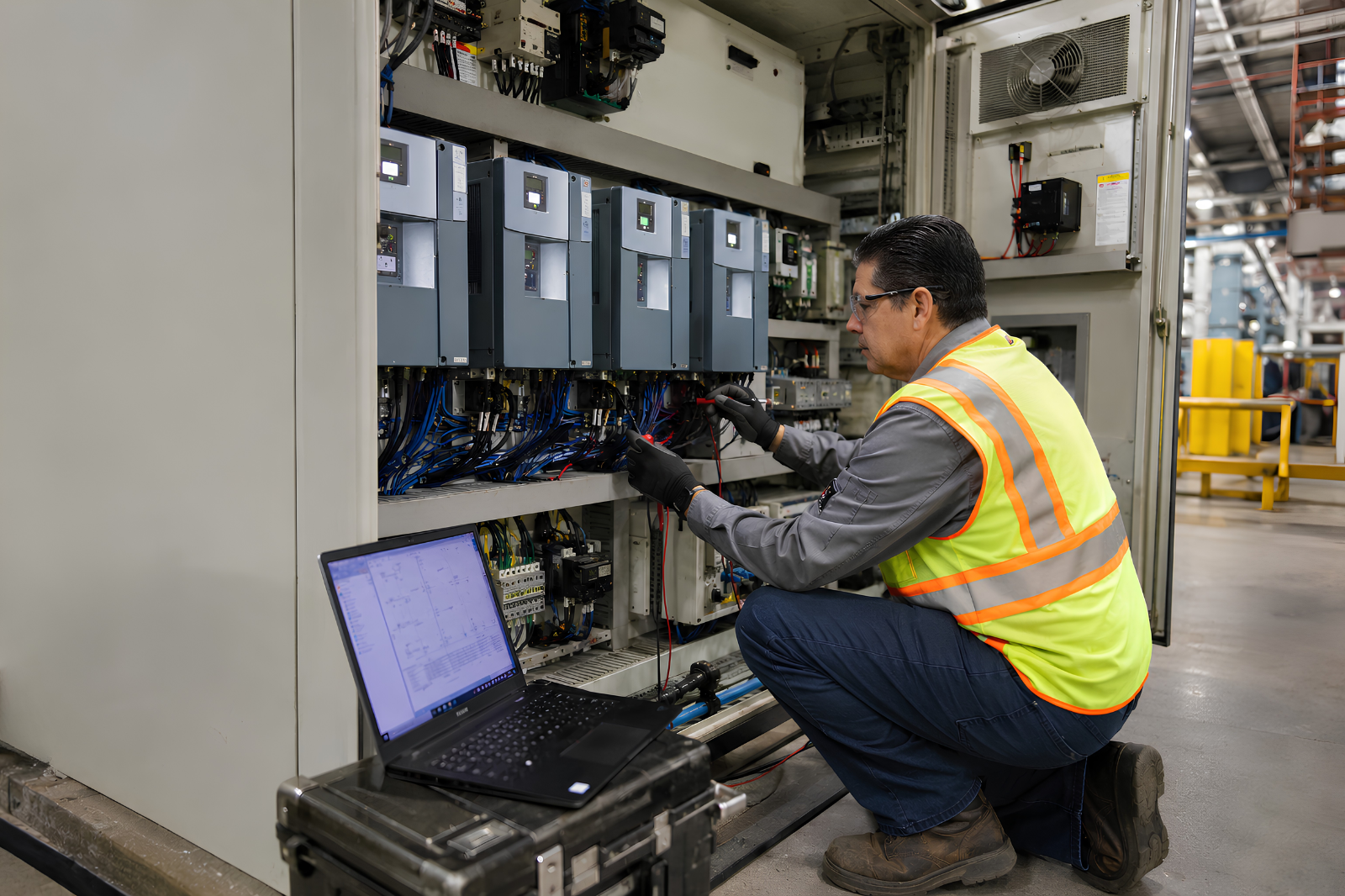
Image Source: Custom digital illustration created for Control Concepts
If you only need a smoother motor start and stop, a soft starter is usually enough. If you need to control motor speed while the motor is running, you need a VFD.
That is the decision in plain English, and for most applications, it gets you most of the way there.
If you are trying to get a motor under control, you have probably run into the same question everyone else does: should you use a soft starter or a variable frequency drive? They can seem similar at first, they both come with a real cost, and picking the wrong one can leave you paying for capability you never use or missing the capability you actually needed.
Here’s the good news: the answer usually comes down to one simple question, and once you know it, the choice gets a lot easier.
What is the difference between a soft starter and a VFD?
A soft starter only smooths out how a motor starts and stops, then steps out of the way while the motor runs at full speed. A VFD controls the motor’s speed the entire time it runs.
That one line is the decision in a nutshell. If you only need a gentler start, a soft starter is likely enough. If you need to change how fast the motor runs during operation, you need a VFD. The rest just helps explain why.
What does a soft starter actually do?
A soft starter reduces the sudden jolt a motor takes when it switches on. Instead of hitting the motor with full voltage all at once, it ramps the voltage up over a few seconds so the motor comes up to speed more smoothly.
That gentle ramp does a few helpful things:
- Cuts inrush current. A motor started across the line can pull six to eight times its normal running current for a moment. A soft starter tames that spike, which is easier on your electrical system and can help you avoid nuisance breaker trips.
- Reduces mechanical stress. Belts, gears, couplings, and shafts all take a beating from hard starts. A softer start means less wear and fewer surprise failures.
- Prevents water hammer on pumps. A sudden start or stop can send a pressure surge through your piping. A controlled ramp protects the system.
Here’s the key point people miss: once the motor reaches full speed, most soft starters hand off to a bypass contactor and get out of the way. The motor then runs at full speed, exactly like it would without the soft starter. A soft starter controls the start and the stop. It doesn’t control the speed in between.
What does a VFD do differently?
A variable frequency drive, or VFD, controls the frequency and voltage going to the motor, which lets it control the motor’s speed continuously, from a crawl all the way up to full speed and anywhere in between.
Because it is always in the circuit, a VFD gives you things a soft starter simply cannot:
- Full speed control while running, not just at startup.
- A built-in soft start, since ramping up is part of how it works anyway.
- Real energy savings on the right loads, which we will come back to because this is where a VFD often pays for itself.
- Precise control for processes that need to hold a specific speed, tension, or flow.
The tradeoff is that a VFD costs more up front, takes up more space, and produces heat that your enclosure has to deal with. It’s a more capable tool, and it asks a little more of your installation in return.
Soft starter vs. VFD: a quick comparison
| Feature | Soft Starter | VFD |
|---|---|---|
| Controls startup | Yes | Yes |
| Controls speed while running | No | Yes |
| Saves energy on pumps and fans | No | Yes |
| Up-front cost | Lower | Higher |
| Size and heat | Smaller, less heat | Larger, more heat |
| Best when | You just need a gentle start and stop | You need to vary speed or save energy |
When is a soft starter the right choice?
A soft starter is usually the better pick when you need to protect equipment during startup, but the motor runs at one steady speed the rest of the time.
Common examples include:
- Pumps where you want to avoid water hammer but flow stays constant.
- Fans and blowers that run at full speed once they are up.
- Conveyors that just need a smooth start to avoid jerking the load.
- Compressors that benefit from reduced inrush and mechanical stress.
If the motor’s job is basically “turn on, run at full speed, turn off,” and your only real concern is the shock of starting and stopping, a soft starter gives you what you need without paying for speed control you will never touch.
When should you choose a VFD instead?
A VFD is the right call any time you need to change the motor’s speed during operation, or when varying the speed would save you money.
Reach for a VFD when:
- You need to run the motor at different speeds to match production, flow, or demand.
- The load is a variable-torque pump or fan. This is the big one. Slowing a pump or fan even a little produces a large drop in power draw, so a VFD can cut energy use significantly on these loads.
- You need precise control of speed, torque, tension, or position for your process.
- You want full torque at low speed, which a soft starter cannot deliver.
If your process changes and the motor needs to keep up, a VFD is worth the extra cost and complexity, as long as you understand what a VFD is and how it can fail. On variable pumps and fans especially, the energy savings alone can justify it.
What is the most common mistake people make?
The most frequent mistake we see is buying a VFD purely for its soft start feature, then running the motor at full speed all the time and never using speed control.
If a gentle start is truly all you need, a soft starter usually does the job for less money, in a smaller footprint, with less heat to manage. On the other side, we also see facilities install a soft starter to save money and then wish they had speed control six months later.
The better question isn’t “which is cheaper today?” It is “will this motor ever need to run at different speeds?” Answer that honestly, and the choice usually takes care of itself.
When it is worth a second opinion
For a lot of machines, the choice is obvious once you answer the speed question. Where it gets tricky is in the in-between cases: a pump that runs constantly most of the year but ramps seasonally, or a line you might automate later. In those cases, it helps to talk it through with someone who has seen the same call go both ways.
That’s where a quick conversation with Control Concepts can save you money. We work on both soft starters and VFDs, so we have no reason to steer you toward one over the other. Tell us the load and how you actually run it, and we will help you land on the right fit before you buy.
Frequently asked questions
Can a VFD do everything a soft starter does?
Yes. A VFD includes a soft start as part of how it operates, so it can replace a soft starter. The reverse is not true, since a soft starter cannot control speed while the motor runs.
Is a soft starter cheaper than a VFD?
Usually, yes. Soft starters generally cost less up front, take up less space, and produce less heat. If you do not need speed control, that lower cost is a real advantage.
Does a soft starter save energy?
Not during normal running. A soft starter only manages the start and stop, then lets the motor run at full speed. For energy savings on pumps and fans, you need a VFD.
Which is better for a pump?
It depends on the pump. If flow is constant and you only want to prevent water hammer, a soft starter works well. If flow varies and you want to save energy, a VFD is the better long-term choice.
Can I replace a soft starter with a VFD later?
Yes, and many facilities do exactly that when their needs change. If you think speed control might be in your future, it can be worth planning for a VFD from the start.
Still not sure which one you need?
If you are weighing a soft starter against a VFD for a specific machine, the fastest way to get it right is to talk it through with someone who works on both every day. Reach out to Control Concepts, and we’ll help you match the right control to your application.